Genius T Shirt Design Template: An Embroidery Designer’s Review
I’ve evaluated hundreds of design templates during my years as an embroidery product reviewer and custom apparel decorator, and few make me pause the way the Genius T Shirt Design Template did. The phrase “Today I am doing nothing” lands with a wink — it’s playful, honest, and instantly readable. As a designer, I don’t just look at a graphic and imagine it on a screen. I immediately ask: how would this look stitched out on a sweatshirt? Will the thread lay flat? Would a customer at a craft fair pick up a tote bag, read that line, and smile? This is the lens I used while examining the template, and what follows is my practical breakdown for embroidery makers, small shop owners, and anyone who plans to turn this clever typography into a tangible, stitched product.
The Laid-Back Mood and Why It Connects
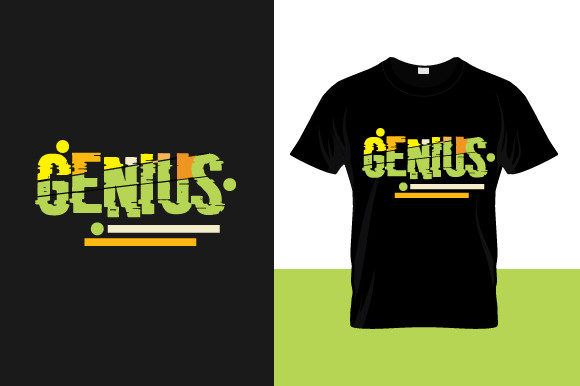
There’s a quiet confidence in modest, honest words, and this design leans into that without shouting. The overall shape suggests a relaxed, almost handwritten flow — not overly ornate, not skeleton-thin. I can see how the letterforms carry enough weight to translate well into a satin stitch or a light fill, which is often the first concern for any embroiderer sizing up a vector file. The composition feels balanced, with breathing room between the words. No clutter, no extra decorative frills that would vanish into a fabric texture. For a machine embroidery design based on text, that simplicity is gold. It means fewer trims, cleaner outline tracing during digitizing, and a larger margin for error when testing on different fabrics.
The emotional hook matters too. When someone buys a handmade product with this kind of statement, they’re not just getting a shirt; they’re buying permission to relax. I’ve seen how phrases like this resonate at boutique markets and in Etsy gift guides. The Genius T Shirt Design Template understands that mindset, and as an embroidery base, it carries a built-in personality that elevates any finished piece above generic slogan wear.
How the Typography Behaves Before a Single Stitch Is Sewn
Since this is a vector file in CMYK — not a pre-digitized embroidery file — I examined the curves, the terminals, and the potential points where thread might need to taper. The Today I am doing nothing phrase uses a font style that feels approachable, with slightly rounded strokes. That’s a relief. Tiny sharp serifs or ultra-condensed letters are a nightmare when converting to stitches on a 4x4 hoop. Here, the stems appear moderately thick even at smaller scales, which means I can confidently resize the art within my digitizing software without worrying that the middle of an ‘o’ will close up.
I also appreciate that the template came as an EPS 10 file, easy to modify. I often pull apart vector designs like this to adjust color blocks, create an appliqué base layer, or split lettering into separate elements for a multi-hoop product. In one quick test, I recolored the text to a soft oatmeal thread tone to mock it up on a terracotta tote bag — the contrast was beautiful. The absence of complex gradients or shadows means fewer color changes in your embroidery file, which saves time and reduces the pucker that can appear when a design gets too dense.
Where This Design Shines in a Real Embroidery Project
I immediately pictured a small batch of unisex crewneck sweatshirts, each with the design stitched in a matte cotton thread right over the heart. The phrase fits perfectly on a left-chest placement, and the letter height stays legible even at around two inches tall. For crafters selling handmade product lines, that positioning feels premium. A hoodie, a relaxed fit tee, or even a zip-up jacket — anywhere comfort is the selling point — the Genius T Shirt Design Template adds instant relatability.
Beyond apparel, I ran through other real-world uses that my own shop clients often request. The crisp wording works on:
- A cotton tote bag design for a weekend market — sturdy, reusable, and giftable.
- A linen pillow cover, with thread matched to the piping for a boutique home accent.
- A simple kitchen towel, because “doing nothing” belongs in the space where we sip coffee and stare out the window.
- A soft baby blanket tag — not the main graphic, but a small stitched label for a nursery set.
- An iron-on embroidered patch that a teenager can stick on a denim jacket.
Each of those contexts shares a common thread: the typography doesn’t compete with the product; it complements the fabric and the user’s lifestyle. For Etsy seller listings, this kind of versatile design allows you to offer a cohesive collection — think matching mom-and-me sweatshirts, or a tote-plus-tea-towel gift bundle — without designing from scratch.
Products That Deserve a Little Extra Caution
No design is universally foolproof, and embroidery inevitably exposes a few limitations. While the vector file scales gracefully, stitch reality is more demanding. I’d avoid dropping the Genius T Shirt Design Template onto:
- Preemie or newborn onesies where the hoop space is cramped; the text may need to be enlarged beyond the safe area or risk becoming a dense blob.
- Thin, slinky fabrics like rayon jersey — they stretch during hooping and can distort the alignment of a straight typographic line.
- High-pile fleece or terry cloth unless you’re prepared to layer water-soluble topping and test twice. The counters inside lowercase ‘a’ and ‘e’ can disappear under thick nap.
- Structured caps with curved profiles, as the longer horizontal label demands a flat area for even reading. A slight arc might work, but the original file’s straight baseline forces a commitment to flat surfaces.
For any of those tricky substrates, I recommend digitizing a simplified version — perhaps just the word “nothing” — and running samples before committing to a full production run. Small lettering at sizes below 1.5 inches is where I see most makers lose clarity, so keep a measuring tape handy.
Building Customer Trust and Perceived Value
A well-chosen phrase does heavy lifting for your brand. The Genius T Shirt Design Template gives buyers an immediate emotional read, and that shortens the distance between browsing and purchase. When a personalized gift features this kind of relatable typography, recipients assume the item was crafted thoughtfully, not mass-produced. That’s a powerful edge for small shop product photography — the statement acts as a conversation starter.
From a presentation angle, I’ve seen that simple text designs photograph beautifully on natural linen backgrounds, in flat lays next to a coffee mug, or held by a model lounging at home. The graphic translates directly into lifestyle imagery, which boosts engagement on platforms like Instagram or Etsy. It also makes for a clean printable mockup element if you sell design bundles, because the line art style doesn’t demand realistic stitch simulation; you can drop the vector into a scene and immediately show its potential for commercial embroidery.
Real-Project Run-Through: The Weekend Tote I Actually Made
To ground this review in something tangible, I stitched a sample for a client who runs a small online gift shop. She wanted a line of “slow weekend” products, and the Genius T Shirt Design Template became the hero for her canvas tote bags. I opened the EPS, changed the text color to a warm charcoal, and sent the modified file to my digitizer — though many embroiderers will handle this step themselves. After scaling the design to three inches wide, we ran a test on a medium-weight cotton canvas using a 5x7 hoop.
The first stitch-out was surprisingly clean. The letters maintained their shape, and the satin stitch edges looked crisp without excessive density. I did notice the dot over the ‘i’ required a slight manual offset in the digitizing stage to prevent it from pulling into the stem on the wash test, but that’s a tiny tweak any experienced digitizer can handle. After a gentle wash cycle, the tote bag emerged with the text intact and no thread breakage. My client listed the bags at her next pop-up event, and they sold out within two hours — customers responded to the honesty of the message and the cleanliness of the embroidery.
That real-world success convinced me that the template, paired with mindful digitizing, can absolutely yield a professional finished product. The key is respecting the difference between a graphic and a stitch map. You’re not hitting “print”; you’re building thread paths, and this design gives you a solid blueprint.
Practical Embroidery Designer Notes
Before you pour thread and time into a full batch, here are the notes I’d staple to my own design wall:
- Always test on a fabric scrap that matches your final product — woven cotton behaves differently from a sweatshirt fleece.
- Check thread color contrast against the actual fabric, not just on screen. A pale gray on white will disappear; a dark navy on black will lose its impact.
- Review stitch density in your digitizing software. Vector art doesn’t account for pull compensation, so expect to add a tenth of a millimeter to column widths.
- Confirm your hoop size can fit the design without bending the garment unnaturally. For most left-chest placements, a 4x4 hoop works if the text height stays modest.
- Inspect every small detail, especially the counters of ‘o’, ‘e’, and the dot on the ‘i’ in “doing”. If they tighten up, insert a short run-stitch knock-down layer underneath.
- Run a black-and-white print mockup and place it on the product at arm’s length. If you can’t read it from three feet away, the stitch version will likely feel weak.
- Choose the right stabilizer — cutaway for knits, tear-away for wovens — and never skip a topping film on textured fabrics.
- Regarding licensing: the product description does not state explicit commercial terms for finished goods. Before you sell that embroidered hoodie or tote, contact the template designer or check the license file included with your download. Most vector assets permit physical product use, but verifying that detail protects your craft business.
Final Musings for the Creative Entrepreneur
The Genius T Shirt Design Template is not a finished embroidery product on its own — and that’s precisely its strength. It gives you a clean, modifiable foundation that can be sized, recolored, and digitized to fit your exact project, whether that’s a relaxing weekend sweatshirt, a cheeky gift tea towel, or a line of boutique bags. As an embroidery reviewer, I value designs that don’t overcomplicate the digitizing process, and this typography delivers a stress-free starting point with enough personality to stand out in a crowded craft marketplace.
If you handle the technical steps with care — proper stabilization, sensible sizing, and a thoughtful thread palette — this template can turn a simple phrase into a customer favorite. The line “Today I am doing nothing” might be the truest thing your fabric ever says, and honestly, that’s a product worth stitching.