Black White Sweatshirt Graphics for Hoodies & Apparel
There is a moment in every digital product creator's workflow when a file lands on the screen and the first thought is not excitement but quiet evaluation. That was exactly my reaction when I opened the Black White Sweatshirt Template Svg. I was not looking for inspiration. I was scouting a reliable, clean graphic design asset that could move straight into a product lineup without hours of cleanup. What I found was a technical flat sketch that felt more like a production tool than a decorative file, and that turned out to be its strongest selling point.
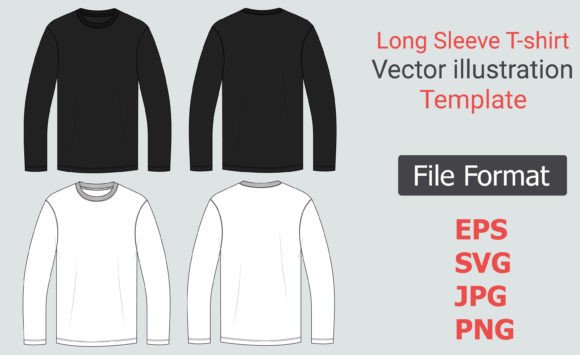
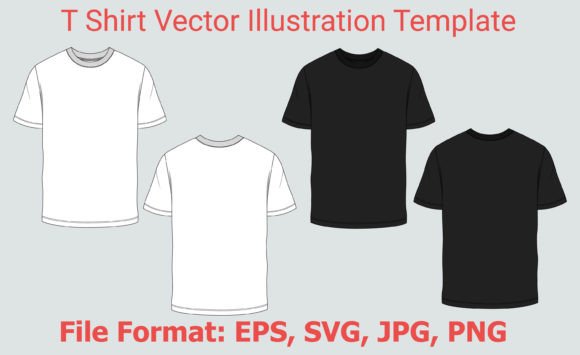
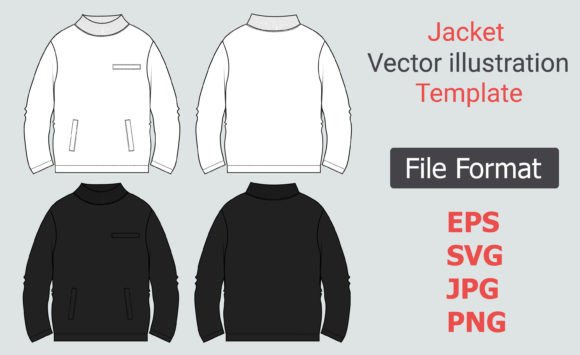
The asset is described as a long sleeve sweatshirt technical drawing, rendered as a fashion flat sketch in vector format. Front and back views are included. The entire illustration is presented in black and white, which reads less like a style choice and more like a deliberate invitation to customize. This is not a pre-colored clipart piece waiting to be printed as is. It is structured like a blank canvas for anyone building merchandise, apparel mockups, or commercial design bundles.
First Impressions and the Type of Seller Who Will Use This
The file opens with a utilitarian mood. There is no decorative flourish, no distressed texture, no attempt to mimic a hand-drawn aesthetic. The lines are precise, the proportions balanced, and the views align properly when placed side by side. For a seller who specializes in print-on-demand product templates, this matters more than visual charm. A sweatshirt outline that distorts under a sublimation transfer or loses clarity on a product mockup is a liability. This one holds its structure.
The audience for this asset skews practical. Think of the Etsy seller who builds custom apparel listing images for customers who want to see their own designs on a sweatshirt before purchasing. Think of the Canva template seller who needs a reliable apparel base that accepts color fills without breaking the contour. Think of the Cricut user who needs a clean cutting path for heat-transfer vinyl projects. The file does not romanticize the garment. It documents it, which makes it versatile across very different selling models.
Where the Technical Flat Sketch Format Shines
A fashion flat sketch behaves differently from a lifestyle product photo or a rendered mockup. It strips away fabric texture, lighting, and model context, leaving only silhouette and seam lines. For product presentation, this is surprisingly useful. When I tested the asset inside a mockup preview layout, the technical drawing gave the listing a clean, specification-sheet quality that contrasted well with styled lifestyle images. It told the buyer exactly what they were purchasing without ambiguity.
The front and back views mean the file can anchor a product listing page with dual-angle clarity. A customer scrolling through a digital download shop sees the front outline, then the back, and understands the garment shape within seconds. For shops selling SVG designs or sublimation-ready layouts, this reduces the hesitation that comes from unclear product dimensions.
Testing the Color-Changing Capability
The product description emphasizes easy color changing, and that claim held up under a quick workflow test. Because the illustration is built as a fully vector file, selecting the main body area and applying a new fill color took seconds in standard vector editing software. The separation between the sweatshirt body, ribbing, and seam lines remained intact, which meant I could recolor the garment without accidentally merging adjacent elements. For anyone selling design bundles or customizable templates, this is a non-negotiable feature. A file that claims easy editing but collapses layers under a fill command wastes time and damages seller confidence.
I tested a neutral heather gray, a muted terracotta, and a deep forest green. Each color read clearly against both white and dark gray backgrounds. The line weight stayed visible without dominating the shape. For social media graphics or promotional visuals where the sweatshirt outline needs to pop inside a crowded feed, this visibility factor becomes essential.
The Commercial Angle for Digital Product Sellers
From a business perspective, the Black White Sweatshirt Template Svg functions best as a supporting asset rather than a standalone product. I would not list this file by itself and expect high-volume sales. However, bundled inside a seasonal collection, paired with typography templates, or offered as part of a print-on-demand starter kit, it adds perceived value. Customers browsing a creative marketplace may not articulate why a bundle feels complete, but a technical flat sketch communicates professionalism in a way that decorative clipart alone cannot.
For shops that sell commercial licenses alongside design assets, this file presents no obvious trademark complications. The garment silhouette is generic, the seams follow standard sweatshirt construction, and nothing ties it to a specific brand identity. That clearance is important when building a small business branding resource or a commercial design pack intended for resale.
Practical Product Applications That Work
After working with the file across several mock scenarios, here is where it performed without friction:
- Apparel mockup templates for Etsy product listings where the seller wants to display customer designs on a clean garment outline
- Sublimation design previews that require a crisp transfer area demarcation on long sleeve sweatshirts
- Canva template kits where users drag and drop their artwork onto a pre-made sweatshirt base
- Print-on-demand product guides showing print placement zones for front and back printing
- Social media graphics promoting new hoodie or sweatshirt collections with consistent garment outlines
- Design bundles that need a technical apparel element to balance decorative clipart and illustration files
- Cricut project templates for heat-transfer vinyl placement on physical sweatshirt blanks
- Packaging design inserts where a small garment icon adds instructional clarity to care cards or size guides
Where Caution Is Necessary
Not every product category suits a technical flat sketch. During testing, I found specific limitations worth noting before committing the file to a listing:
- Sticker designs at small sizes lose the seam details and read as amorphous shapes. The line work compresses poorly below two inches.
- Dark background mockups require a stroke color inversion. The default black outline vanishes against dark surfaces, so sellers need to prepare a white-outline variant.
- Tumbler wraps and curved surface applications do not align naturally with the flat projection. The front and back views distort when warped around cylindrical templates.
- Highly detailed composite layouts with multiple overlapping design elements can make the sweatshirt outline feel cluttered. The file works better as a focal element than as a background component.
File Organization and Customer Experience
One detail that separates professional digital product creators from casual uploaders is how files are delivered to buyers. The Black White Sweatshirt Template Svg arrives as a vector file, but a seller preparing it for a commercial design listing should consider expanding the offering. I would include a high-resolution PNG with a transparent background, a version with the outline reversed for dark mockup placement, and a quick-reference preview image showing both views side by side. This small packaging effort reduces customer support inquiries and positions the shop as thorough.
Naming conventions also deserve attention. A file labeled with a generic string of numbers frustrates buyers who download multiple assets across different shops. Renaming the file to something descriptive that includes the garment type, views included, and format helps customers locate it in their design assets folder weeks after purchase.
Font Pairing and Typography Compatibility
Because many sellers will place text designs inside or near the sweatshirt outline, I tested how different font categories interact with the technical sketch. A clean sans serif font in bold weight held its own against the garment lines without creating visual tension. A delicate script font felt slightly incongruent unless the lettering was scaled large enough to read as intentional contrast. Serif fonts with moderate stroke variation paired well for a collegiate or vintage aesthetic. Handwritten fonts worked best when the overall composition leaned casual and playful. For sellers building typography-focused mockups, testing font weight against the line thickness of the sketch is a worthwhile step before finalizing listing images.
Licensing and Commercial Use Clarity
Any digital product creator incorporating a third-party graphic design asset into sellable products must verify licensing terms. The description suggests this file is intended for commercial applications, but the specific license structure should be confirmed before using it inside a design bundle, a Canva template sold to end users, or a physical merchandise line. Extended commercial licenses may be required for products that distribute the asset in an editable format. Checking this early avoids the discomfort of retroactively adjusting a product listing that has already gained traction.
Testing Before Publishing a Listing
The most reliable way to evaluate whether this file supports a professional-looking online shop is to run it through a pre-listing checklist. I tested the following sequence and recommend it as a baseline:
- Open the vector file and confirm layer structure remains intact after importing into editing software
- Apply three different color fills to verify easy color changing functionality
- Export a PNG with transparent background and place it on both a white and a dark product mockup
- Shrink the graphic to a thumbnail size representative of a creative marketplace search result page and assess legibility
- Pair it with two different font styles to test visual hierarchy in a listing image layout
- Check the cut path quality if intended for Cricut or Silhouette projects by running a test cut on copy paper
- Preview the file inside a digital download shop template to evaluate how it contributes to brand consistency across multiple listings
Passing this sequence gives a seller confidence that the asset will perform under real marketplace conditions rather than just looking acceptable in isolation on a design screen.
How This Asset Supports Brand Consistency
Shops that sell across multiple product categories often struggle with visual coherence. A collection might include mugs, tote bags, and apparel, each photographed or rendered in different styles. Introducing a consistent technical flat sketch element across listing images creates a subtle thread of brand identity. The Black White Sweatshirt Template Svg can serve as that anchor for any garment-related product. When a repeat customer sees that familiar outline style, they recognize the shop's presentation approach before reading the listing title.
This effect compounds when the same technical drawing style is applied to other garment types, creating a cohesive product catalog that feels intentionally designed rather than haphazardly assembled. For a handmade business or a small business branding effort, that cohesion increases customer trust and encourages higher click-through rates on related product suggestions.
Final Practical Thoughts for the Selling Workflow
The Black White Sweatshirt Template Svg is not the kind of design asset that sparks instant creative excitement. It does not arrive with trendy textures or seasonal motifs. What it delivers instead is structural reliability, which, over dozens of product listings and hundreds of customer interactions, proves far more valuable. It reduces the time spent fixing poorly constructed vector files. It provides a clean foundation for mockup previews. It communicates garment details to buyers who want clarity before clicking purchase.
For Etsy sellers assembling a new sweatshirt or hoodie collection, print-on-demand creators building product templates, or digital download shops curating a design bundle for a seasonal launch, this file earns its place through quiet dependability. The black and white format, the dual-view layout, and the easy color changing functionality combine to make it a practical workhorse asset that supports a wide range of commercial design applications. Testing it thoroughly across mockups, thumbnails, and cut projects before publishing ensures it performs exactly as needed when a real customer relies on it.