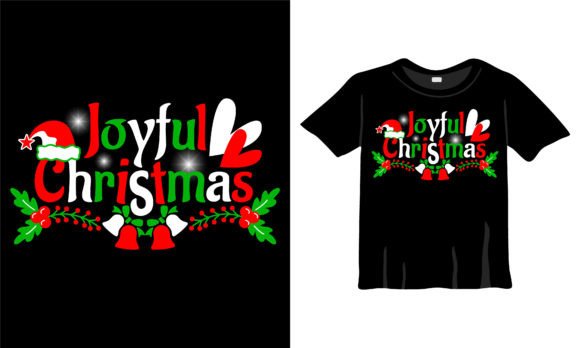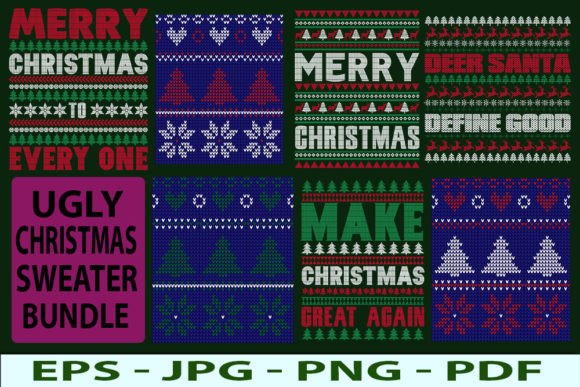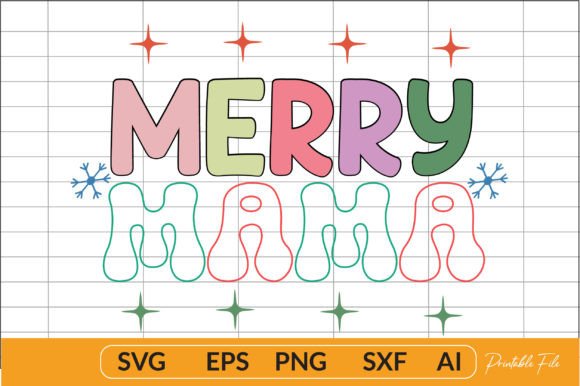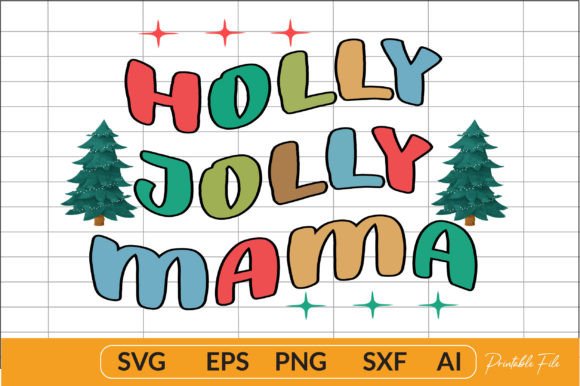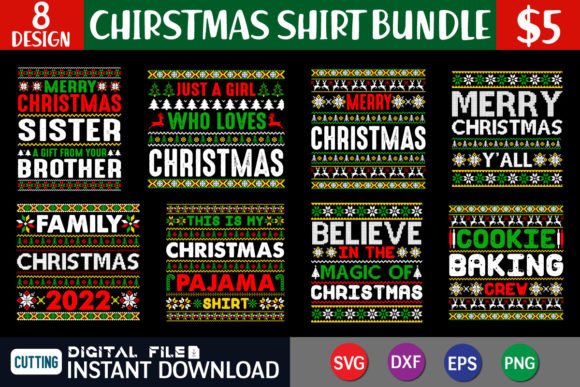
Christmas T-Shirt Designs Bundle: Graphics
When I’m scouting graphic design assets for seasonal listings, I judge fast. The first unzip of the Christmas T Shirt Bundle Print Template told me this was built by someone who understands production, not just decoration. The previews hinted at a cheerful, slightly playful mood, but not in a way that limits you to kids’ apparel. The line quality and layering suggested a versatile digital product that could move easily from a cozy sweater mockup to a crisp sublimation mug or a rustic wood sign.
The visual personality leans festive and approachable, with a clean commercial finish. I’d place its niche appeal between handmade market charm and small-shop professionalism. That sweet spot matters for Etsy products or print-on-demand collections where buyers are scanning thumbnails for emotional warmth, not just a slogan. The artwork doesn’t scream; it smiles. That makes it easier to design around with minimal extra effort.
First Impressions of the File Kit
Instead of throwing one giant folder at you, the bundle arrives as a compressed ZIP with clearly separated file types. That small organizational step tells me the creator thought about sellers who repackage or relay designs to customers. Inside, I found SVG design files, DXF alternatives for Silhouette users, vector EPS master copies, and PNG design rasters at the claimed 300 DPI with true transparent backgrounds — essential for Cricut projects and quick mockup layering.
Quick count: 8 unique designs delivered across all formats, so 32 total files. For a seasonal design bundle at this price tier, that’s lean but not skimpy. It’s the kind of number where you can run a small themed collection, a blog freebie, or a fast-rotation digital download micro-niche without overwhelming buyers. The individual designs share a cohesive visual weight, so they don’t clash when displayed together in a product grid.
Testing Across Real Product Scenarios
Before you publish a listing for a printable design or a finished garment, you need to run the graphics through a checklist of common uses. I tested a few of the SVG cut files on adhesive vinyl and heat-transfer material. The cut paths were clean, with minimal stray nodes — nothing that needed hand-repair in Cricut Design Space. Fine details like snowflake dendrites or delicate letter loops held up well to medium-pressure kiss-cut settings, though I’d still recommend a test cut on your own machine because blade sharpness varies wildly.
Next, I previewed the PNG designs on a variety of backgrounds: white garment mockups, dark heather fabric, painted wood, and ceramic mug templates. The anti-aliasing was smooth, and the transparency edges didn’t show the dreaded white halo. This step alone often separates a commercial design worth stocking from a personal-use-only scrap. With these files, I got clean composites quickly, and the 300 DPI resolution held up at print dimensions approaching full-front shirt placement without pixelation.
Where the bundle shines most unexpectedly is as a Canva template starter. Because the PNGs have transparency and the vectors scale without loss, dragging one into a social media graphic or a customer-editable flyer feels effortless. I can picture a small business branding kit where holiday cheer meets professional restraint — think a slim logo remark, a seasonal thank-you card, or a January-sale announcement with Christmas remnants. That flexibility stretches the asset beyond apparel.
Building a Sellable Product Line Around One Asset
If I were launching a fast seasonal window on Creative Fabrica or a print-on-demand store on Shopify, I’d treat this bundle as the visual anchor for multiple listings. One design becomes a t-shirt design mockup; another transforms into a pillow cover or a kitchen towel graphic; a third, with simpler shapes, works as a sticker design for journaling kits or planner decals. Because the eight designs share proportional line thickness and thematic motifs, the products feel curated rather than chaotic.
I’ve learned that perceived value multiplies when you show a buyer how the same artwork lives across different formats. So, I paired two designs with a serif welcome note and a script family name for a custom porch sign template. The result looked intentionally layered, not messy. For a mug design mockup, I swapped in a smaller version of a reindeer motif and added a handwritten date; the composition stayed balanced because the PNG artwork itself didn’t dominate the surface. This kind of adaptability is exactly what a graphic design asset needs to earn its place in a seller’s toolkit.
Small Details That Boost Professional Presentation
When you’re selling digital downloads, the preview image is the product. For that reason, I tested how a couple of the designs read at marketplace thumbnail size, about 570 pixels wide. With the right mockup framing — a folded shirt, a close-up mug, a flat-lay card — the artwork held its identity without turning into visual noise. The key was using a pale background to let the design breathe. Dark mockups also worked if I added a subtle glow behind the graphic or used a distressed finish to soften hard edges.
One practical note on color: many of the included PNG files default to a solid off-white fill on elements that should read as white in the final product. That’s a common t-shirt design quirk to prevent the printer from treating a cutout as transparent. I appreciated that the designer made this call consciously, because it saves the extra step of adding a temporary background during printing. Still, you’ll want to double-check your POD platform’s requirements for transparent areas, especially when layering over red or navy fabric.
Where This Bundle Shines in a Commercial Workflow
After running the files through my usual production tasks, I’d confidently position these graphics for:
- Seasonal apparel collections — t-shirts, sweatshirts, and onesies that need festive charm without cartoon chaos
- Sublimation blanks — tumblers, tote bags, and ceramic ornaments where crisp vector lines keep transfer sharp
- Printable wall art — quick 8x10 nursery prints or kitchen signs for a holiday pop-up shop
- Greeting card templates — layered with script fonts to create instant card packs for craft market stalls
- Social media templates — blog post headers and promo graphics for handmade sellers pushing a limited-time offer
- Cricut scrapbooking kits — SVG elements easily sized down for page layouts or gift tags without losing detail
Where to Apply Caution
No single design asset fits every product. Here’s where I’d hold back or test more rigorously:
- Ultra-fine sticker sheets — small-scale cuts below a half-inch may lose definition, especially on intricate snowfall designs
- Dark-on-dark apparel — without a light underbase, some details vanish into the fabric
- Low-resolution print products — avoid stretching the PNGs far beyond their native dimensions; vector EPS is the safer bet for large-format signage
- Text-heavy Canva templates — the designs are decorative, so heavy typography layered on top can become cluttered fast
Licensing, Packaging, and Customer Experience
From a seller’s operational standpoint, the commercial usage terms are clear, but I always verify the license explicitly. I’d create a clean “Read Me” file for my customers, listing the official source and any attribution limitations. When I repackage these designs as part of a bundle within my own shop, I ensure every file retains its original quality and I never mislead buyers about the number of unique designs. Transparent listing descriptions reduce dispute rates, especially around holidays when delivery expectations are emotional.
Organizing Files for End Users
The way you deliver files impacts reviews. After extracting, I split the SVG files into a folder labeled “Cricut & Cutting Machines,” the DXF files into a separate “Silhouette” folder, and the vector EPS into “Professional Print.” The PNG images get their own preview folder with transparent thumbnails. This small step — call it packaging — instantly makes a buyer feel secure. For anyone selling on platforms like Etsy or Creative Fabrica, a tidy download file is a trust signal as strong as a five-star graphic.
Long-Term Value for a Digital Seller’s Library
I don’t buy seasonal graphic design assets just for the current year. The better test is whether I’d still use them in a future collection. This bundle passes that check because the motifs strike a balance between classic holiday imagery and current clean-line tastes. The elk and snow globe designs I spotted could easily slip into a winter woodland theme beyond December, extending usefulness into January. Where an asset can straddle two months instead of one, its commercial license cost amortizes beautifully.
For sellers building a brand around storytelling, these illustrations offer enough silence. They don’t try to tell entire narratives on their own, so they leave room for a shop’s signature font pairing or a unique color palette. That’s what you want from a design bundle — it supports your brand identity without demanding center stage. I’ve already tucked a few reindeer and holly outlines into a “winter wishes” sub-collection that I’ll test with a small ad spend come early October.
Final Practical Checks Before Launch
- Always run a physical print test, even if you only sell digitals, to catch color shifts or transparency issues invisible on screen.
- Preview your product mockup on at least three devices (phone, tablet, desktop). Visual hierarchy can break at different sizes.
- Test your SVG designs in Cricut Design Space and Silhouette Studio with the exact blade depth you’d recommend to a beginner customer.
- Pair the artwork with a range of fonts: a clean sans serif for modern shops, a handwritten script for cozy branding, and a serif for rustic markets. See which one pulls the design into focus.
- Check if any design relies on a white background for readability, then decide whether to advise your customers of that in the description.
For the price, the Christmas T Shirt Bundle Print Template earns its place in a production-minded creative’s archive. It’s not an extreme statement piece, but it doesn’t need to be. It functions as reliable filler content — the kind of design asset that holds a seasonal listing together without monopolizing your time. When you’re managing a shop across multiple platforms and the holiday rush is bearing down, practical always beats flashy. Test it, mock it, and then let it work.