Love You More Rhinestone Template: Embroidery Designer’s Review
First Glance and the Feeling It Gives Off
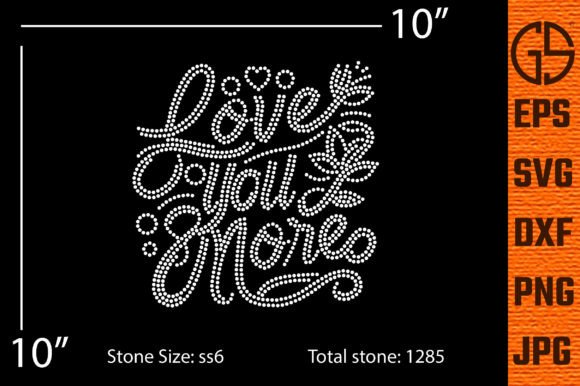
When I first opened the Love You More Rhinestone Template, it landed with a warm, slightly whimsical personality. Not overly sentimental, but definitely something that would catch a customer’s eye on a boutique product table or in an Etsy listing photo. The lettering flows with a casual, hand-lettered charm — the kind that reads as genuine affection rather than mass-produced typography. The curves feel relaxed, and the overall shape holds together nicely without being too rigid. For an embroidery designer or small shop owner, these first-impression cues matter a lot. The mood is tender and personal, which immediately points it toward gifts, baby items, nursery decor, and loved-up apparel.
I could picture a new mom browsing a craft fair, picking up a tiny sweatshirt with this design stitched in soft blush thread, and not being able to put it down. That instant emotional tug is exactly what you want in a piece meant to celebrate someone special. The layout also leaves breathing room, so it won’t feel cramped even if you plan to add a name or a small floss-painted accent later.
Translating the Look into Actual Stitching
Here’s where a designer’s eye has to shift from “pretty on screen” to “how will this sew out.” The Love You More Rhinestone Template comes through purchasing as a set of five files — EPS, SVG, DXF, JPG, and PNG — which tells me it’s built for versatility across cutting machines like Cricut and for digital mockup use. If I’m bringing this into my embroidery workflow, I’m thinking about machine embroidery design digitizing directly from the SVG. The letter connections are friendly but not overly thin, which helps reduce the risk of tiny satin stitches getting lost or pulling on textured fabric. However, I would still watch out for the word “you” — that loop and the slight slant could get dense if you’re not careful with stitch density and underlay settings.
The overall shape sits nicely in a horizontal layout, so mid-sized hoops (think 4x4 or larger) will handle it comfortably. For a standard sweatshirt chest placement or a toddler tee, this fills the space without overpowering the garment. On a tote bag, centered near the top, it would create a clean, polished handmade product that doesn’t feel like a mass-market print.
A Real Project: The Valentine’s Day Tote That Sold Out
Let me set the scene. Last year, a fellow Etsy seller messaged me about a concept for a limited Valentine’s mini collection — a canvas tote bag with a love message, something simple but not cutesy. She was tired of the same heart-and-arrow motifs. I pointed her toward designs like this one. She bought the Love You More Rhinestone Template, digitized the lettering for an embroidery machine, and tested it on a soft oatmeal canvas tote. The thread color was a deep wine red with a hint of sheen. The result looked handmade but refined — like a small-batch studio piece, not a hobby craft. Within a week, her batch of fifteen totes sold out at a local market and online. Repeat orders came in asking for custom thread color swaps, and she even layered a tiny satin-stitch heart at the end for an upcharge option.
In that scenario, the template’s clean lines gave her the jumping-off point. The fact that it came with multiple file types meant she could also use the PNG to create realistic printable mockup previews for her Etsy listing long before she stitched a single piece. That alone saved hours and boosted buyer confidence. Small details like these are what separate a thoughtful craft business asset from a randomly downloaded freebie.
Where This Design Shines Brightest
I’ve worked with hundreds of lettering-based embroidery files, and some just slot into product lines effortlessly. The Love You More Rhinestone Template fits beautifully onto:
- Sweatshirts and crewnecks — the message sits nicely on the chest, slightly arched or straight, and looks balanced on both adult and youth sizes.
- Baby onesies and bibs — scaled down with care, the gentle curves suit infant apparel perfectly, especially for grandparent gifts or first-anniversary keepsakes.
- Canvas tote bags and zipper pouches — paired with a floral or geometric filler stitch, this becomes a high-perceived-value product that commands premium pricing.
- Pillow covers — a scatter cushion with “love you more” in soft metallic thread can anchor a nursery chair or a bedroom reading nook.
- Kitchen towels and aprons — for Mother’s Day packaging, this design adds a sweet, unexpected touch.
- Embroidered patches — digitized with a narrow satin border and merrow edge finish, it turns into a collectible patch that iron-on enthusiasts snap up.
Because the design is rooted in the Graphics and T-Shirt Designs space, it’s naturally oriented toward apparel, but a creative maker can stretch that into home decor, papercraft mockups, and even rhinestone transfers using the SVG or DXF files on a cutting machine. I’ve seen crafters use this exact kind of template to create glitter iron-on vinyl transfers for anniversary tees, and the results are consistently gift-worthy.
The Practical Limits: Where to Proceed with Caution
No design is a one-size-fits-all magic bullet, and the Love You More Rhinestone Template has a few spots that call for extra testing. The descending loop on the “y” and the thinner connections between letters like “o” and “v” can become stitch traps on stretchy fabric if you don’t use a sturdy cutaway stabilizer. When hooping jersey knit or ribbed cuffs, you’ll want to run a sample on scrap first. I’d also avoid shrinking this too much for tiny small hoop sizes — below 3 inches wide, the letter clarity could suffer, especially on looped terry cloth or heavily textured tea towels.
Dark fabrics present another classic challenge. The design relies on contrast for its emotional pop. A deep charcoal sweatshirt needs a markedly lighter thread (cream, pale gold, or dusty pink) to keep the message readable. Without that contrast, you risk losing the “more” and the rhythm of the words. I always recommend testing in black-and-white mockups first; if it holds up in greyscale, you know the shape itself is strong enough for any colorway.
For curved surfaces like caps, the horizontal orientation may need slight adjustments — a gentle arc can be introduced during digitizing, but don’t force it if the letterforms start to distort. Sometimes a simpler placement on the cap’s front panel works better than a full wrap.
How It Lifts Product Value and Buyer Trust
When a customer sees “love you more” on a handmade item, they’re not just reading text — they’re absorbing a feeling. That feeling translates directly into the perceived worth of the product. A well-stitched version of this template signals care, and care builds repeat clientele. During a recent craft fair, I noticed a table where a seller had this exact phrase embroidered onto oatmeal linen pillow covers with French knot accents. Her price point was nearly double the plain covers next to them, and they sold out first. The design’s sentimental pull added the emotional markup that many makers overlook.
From a digital product seller angle, having the SVG and EPS files means you can also create and sell embroidery-ready digital companions or rhinestone-ready templates, as long as you confirm the licensing terms. The multiple file formats let you pivot fast — a quick mockup for a wholesale catalog, a realistic listing photo, or a Facebook group teaser without stitching a single piece. This kind of asset agility is invaluable when you’re juggling multiple Etsy seller SKUs and trying to maintain brand consistency.
Designer’s Field Notes (Before You Stitch or Sell)
Over years of reviewing and using similar lettering designs, I’ve assembled a mental checklist that applies perfectly to this piece:
- Test on scrap first, no exceptions. Even the most beautiful on-screen curves can behave unexpectedly when thread tension and fabric grain get involved.
- Color contrast is everything. On a cream fabric, try a muted coral or thyme green. On denim, a warm white or honey thread amplifies the message.
- Review stitch direction carefully. For the “L” and the tall loop in “y,” I often split the satin angles so the thread doesn’t pull into a harsh line.
- Stabilizer choice matters more than you think. A mid-weight fusible poly mesh under a tote bag panel keeps the lettering crisp through washing; for baby onesies, a soft no-show mesh prevents irritation.
- Check your hoop clearances. If your machine has a limited embroidery field, always verify the design’s bounding box before committing to a production run.
- Confirm commercial use rights. The purchase grants you five file formats to work with, but always double-check whether finished products can be sold as-is, or if derivative works require an extended license. A quick note on the product page usually clarifies this, but when in doubt, ask.
- Use the PNG for previews. High-quality listing photos boost conversion more than you might expect. Even a simple flat lay mockup with this design overlaid can increase add-to-cart rates significantly.
The Verdict for Handmakers and Boutique Owners
After mentally running this through sweatshirt embroidery, pillow cover production, and custom baby gift scenarios, I keep circling back to its quiet versatility. The Love You More Rhinestone Template isn’t trying to be flashy or overly intricate. Instead, it delivers a reliable, emotionally warm message that works across dozens of product types. As a foundation for commercial embroidery projects, it reduces the guesswork: the lettering is balanced, the mood is right for both romantic and familial contexts, and the supporting files let you move between vinyl cutting, paper crafting, and stitched applications without missing a beat.
Whether you’re building a seasonal Valentine’s collection, adding a sentimental staple to your year-round handmade product range, or simply looking for a design that gives a quick confidence boost to your product mockups, this one earns its keep. Just remember to slow down during digitizing, respect the fabric’s personality, and always let the message — not the medium — take center stage.