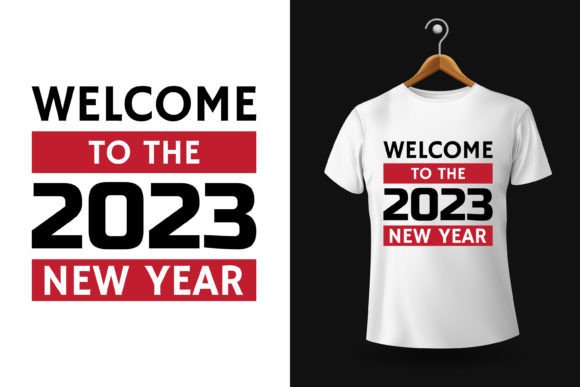
New Year T-Shirt Design Template: Graphics & Content Publishing
When I first opened the New Year T-shirt Design Template, the immediate impression was one of celebratory clarity. This isn’t a noisy, over-cluttered New Year graphic — it strikes a clean balance between festive energy and modern restraint, making it useful far beyond its original apparel intent. As a blog designer and digital publisher who filters every creative asset through the lens of editorial quality, this design hits a sweet spot: it feels seasonal without being disposable, decorative without sacrificing readability. For publishers, that’s gold.
The visual mood lands somewhere between confident and optimistic. The template’s typography choices, color palette, and compositional balance suggest a design that would sit comfortably on lifestyle blogs, creative entrepreneurship websites, digital marketing content, newsletter headers, and even educational platforms that lean into fresh, forward-looking messaging. It effortlessly supports niches that revolve around personal growth, goal setting, productivity, celebrations, fashion drops, e-commerce launches, or annual wrap-up posts. Right away, I could see how it might shift reader perception — turning a standard article into something that feels intentionally curated and worth the click.
Why This Template Works as an Editorial Graphic Asset
The core strength of the New Year T-shirt Design Template lies in its versatility as a graphic design asset. Built for apparel but delivered as a full suite of professional file formats — including a high-resolution 300 dpi PNG, JPEG, SVG, EPS, and an editable Ai file — it’s ready for immediate use in print-on-demand projects, but it truly shines when repurposed for blog graphics, website headers, and social media visuals. The included vector files mean you can scale it without losing quality, which is critical when it moves from a Pinterest pin to a full-width hero image on a homepage.
For bloggers and content creators, the typical workflow bottleneck happens when a design looks good in isolation but falls apart inside an article layout. Not here. I dropped the PNG version into a draft blog post as a featured image and immediately noticed how the visual hierarchy improved: the graphic’s focal point guided the eye toward the headline, while the negative space left room for text overlays. It didn’t fight the content — it framed it. That’s the kind of editorial design integration that builds reader trust, because the experience feels seamless and professionally produced.
A Template That Elevates Multiple Publishing Channels
One of the most underrated aspects of a well-made template is its ability to create a consistent visual identity across disparate platforms. With the New Year design, I tested several real-world placements:
- Blog featured images and thumbnails — The crisp typography and festive but uncluttered look made category pages appear polished, not chaotic.
- Pinterest pins — The vertical crop potential and bold text elements translated into scroll-stopping pins that would likely improve click-through on seasonal content.
- Newsletter headers — Even on a plain white email background, the graphic added a punch of personality without pushing the message aside.
- Lead magnets and downloadable guides — Envisioned as the cover of a goal-setting worksheet or a “Year in Review” printable, it lent instant credibility.
- Social media graphics and digital ads — The PNG and JPEG formats integrated quickly into Canva templates, making it accessible for teams that don’t work directly in Illustrator.
This level of cross-channel utility transforms a simple T-shirt design into a creative design workhorse for small business branding, affiliate marketing, and content marketing. It encourages publishers to build an entire visual campaign around one cohesive motif rather than scrambling for mismatched elements.
When a Seasonal Asset Becomes an Evergreen Tool
While the New Year theme is inherently time-bound, the template’s clean execution gives it surprising longevity. Instead of featuring a specific year prominently (which would date it immediately), the design leans on symbolic elements that feel timeless — hopeful messaging, elegant countdown motifs, or abstract celebratory shapes. This makes it reusable year after year, as long as you tweak a number or date text in the included Ai or EPS file. For a content website that republishes seasonal round-ups or annual goal content, that editability is a major cost and time saver.
Visual Hierarchy and Reader Engagement
Modern readers make split-second judgments about content quality based on visual cues. If a blog post’s featured image appears messy or amateurish, they simply scroll past — no matter how strong the headline might be. The New Year template counters that risk with a clear focal structure. Strong typographic contrast and an inviting color scheme create an immediate stronger first impression, which researchers have linked to lower bounce rates and higher average session durations. In practice, that means someone landing on your New Year resolution guide or e-commerce gift roundup is more likely to stay, read, and convert because the first visual signal says “credible.”
Beyond the initial impact, this design asset supports clearer visual hierarchy when layered with text. The area where the titles, logos, or supporting copy sit can be easily identified, whether you are overlaying typography in Canva, Adobe Express, or a dedicated photo editor. That translates into better click-through potential on Pinterest and social platforms, where legibility amid a crowded feed matters most.
Smart Integration into a Publishing Workflow
As an experienced publisher, I always walk a design through a quick editorial checklist before committing to it. Here’s what I noted while testing the New Year template:
- Desktop and mobile preview — On a laptop screen, the details held up beautifully. On a mobile device, the scaled-down version remained punchy. Thumbnails didn’t become muddy.
- Reading flow compatibility — Placed inside a long-form blog post, it never distracted. Used as a hero image, it pulled the reader directly into the title without competing with the navigation bar.
- Font harmony testing — I paired it next to serif, sans serif, script, and handwritten fonts. Because the template’s own lettering is confident and modern, it played well with most styles; pairing it with a clean sans serif for the headline overlay yielded the most balanced, editorial look.
- Black-and-white legibility — Even in grayscale, the design retained enough contrast to be readable, which matters for accessibility and printing scenarios where color may not be available.
- Background versatility — Against both light and dark blog themes, the asset held its own, though the included transparent PNG gave the greatest flexibility.
Best Applications
- Hero images and full-width blog headers
- Pinterest pins and Facebook link previews
- Article thumbnails for category and archive pages
- Content upgrade covers (checklists, planners, printable designs)
- Newsletter promotional banners
- Digital ads that need a festive yet professional hook
Use with Care
Publishers should exercise caution in a few specific contexts. Very small mobile thumbnails — think 60×60 pixel feeds — can lose the subtle detail. Text-heavy overlays on an already busy section of the graphic may reduce readability, so always test with your planned headline length. For corporate or highly serious professional niches (legal, medical, industrial), the light, celebratory mood might feel out of sync unless you are specifically doing an end-of-year appreciation post. And for websites built around a severe, ultra-minimalist visual system, this template could feel like a departure; if that’s your aesthetic, consider using the vector file to mute colors or adjust the composition.
Technical Details and File Management
The product includes a practical set of file formats: PNG at 300 dpi, JPEG, SVG, EPS, and an Ai (Adobe Illustrator) file. All come compressed in a single ZIP folder. To access the high-resolution workable files, you simply need to extract them using standard software like WinZIP or WinRAR. For website use, I immediately saved a web-optimized copy of the PNG to keep page load speeds fast — the original 300 dpi version is overkill for screens and should be compressed for the web. Tools like TinyPNG or your CMS’s built-in image optimizer can handle that in seconds. The SVG is a standout because it’s infinitely scalable and typically tiny in file size, making it perfect for responsive web headers and dynamic elements on a site.
Before using the files on monetized blogs, affiliate landing pages, or paid digital products, always verify the commercial license terms that accompany the download. Most design marketplaces provide broad commercial use for end products, but when you are creating printable designs or Canva templates for resale, it’s wise to double-check any extended license requirements. Clear licensing protects your brand and ensures you’re publishing ethically.
Brand Identity and the Long-Term Value of a Good Design Asset
What often separates a forgettable blog from one that readers bookmark and revisit is the consistent application of high-quality visuals. A single design asset like this New Year template can anchor a multi-touch content series: the same graphic identifies your New Year category, reappears in your newsletter, and ties together your social media strategy. That repetition builds brand identity faster than most people think. Readers subconsciously associate the clean, optimistic design with your voice, and that familiarity breeds trust.
For affiliate marketers and small business owners, that trust directly boosts conversion rates. A beautifully designed, seasonal-when-appropriate visual signals that you invest in your platform — which makes visitors far more likely to click your recommendations, sign up for your email list, or purchase your digital guide. The New Year T-shirt Design Template thus becomes more than a decorative element; it’s a subtle but effective part of your content marketing engine.
The Publisher’s Final Take: An Asset Worth Working Into Your Calendar
After integrating this template into several mock article layouts, I’m confident it can serve as a reliable go-to for any publisher who needs to inject seasonal relevance without sacrificing design integrity. The provided vector files mean you can re-color, resize, and re-style key elements to fit an evolving brand palette. The transparent PNG lets you drop it onto virtually any background. And the initial learning curve is practically zero — if you can drag and drop into a canvas, you can use this graphic effectively.
From a blog designer’s perspective, the New Year T-shirt Design Template encourages a more intentional, aesthetically cohesive content strategy. It invites the publisher to think beyond just the article and consider the reader’s full visual journey, from the Pinterest pin to the in-article call-to-action. That holistic approach is what turns a hobby blog into a destination site, one graphic at a time.