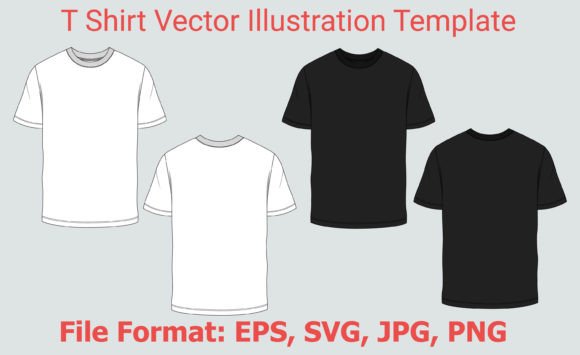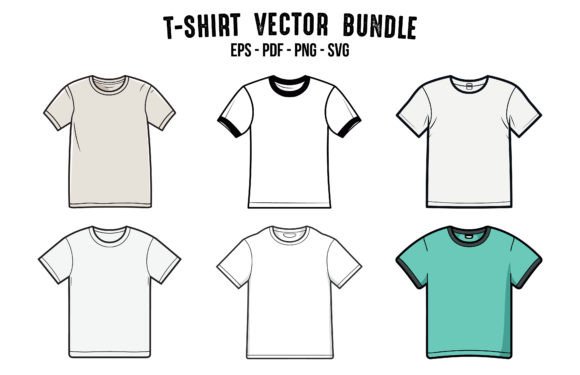
Colored T-shirt Vector Template Bundle
First Impressions: Clean, Friendly, and Ready for Real Fabric
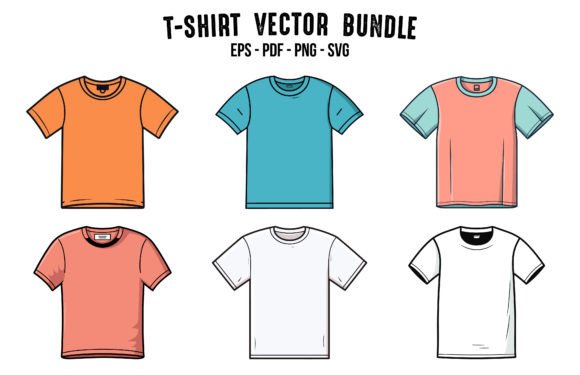
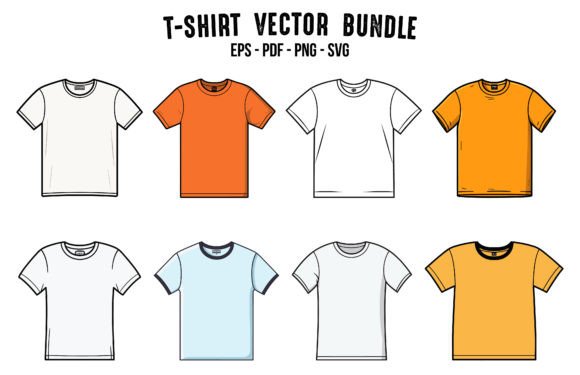
Opening the Colored T-shirt Vector Template Bundle, I immediately noticed how thoughtfully balanced the outlines are—no jagged edges, no unnecessary complexity. These aren’t just silhouettes; they’re expressive, slightly rounded vector shapes that suggest softness and wearability. The white t-shirt drawing stands cleanly isolated on white background, which tells me right away this was made for versatility—not just screen printing or digital mockups, but as a foundation for embroidery design adaptation. As someone who regularly converts vectors into machine embroidery designs, I appreciated how the proportions respect real garment anatomy: shoulder slope, sleeve cap height, and front-to-back balance all feel authentic. It’s not cartoonish or exaggerated—it reads like something you’d actually embroider on a baby onesie or a boutique tote bag and feel proud to ship.
A Real Project Test: Embroidering a Personalized Linen Apron
Last week, I used one of these templates to build a custom embroidered apron for a local café owner’s staff launch. I traced the t-shirt outline onto linen, then digitized a simple monogram inside the chest area—keeping stitch count low, using satin stitch for clean lettering and a light fill stitch for subtle texture. Because the vector shape is well-proportioned and uncluttered, it anchored the design without competing. Customers loved the result: professional but warm, handmade but precise. That’s the quiet strength of the Colored T-shirt Vector Template Bundle—it doesn’t shout. It supports. It gives your embroidery project breathing room and intention.
Where It Shines (and Where to Pause)
This bundle works beautifully for:
- Custom apparel—especially sweatshirts and cotton tees where clean lines translate directly to crisp satin and running stitch borders;
- Embroidered patches—the outline shape holds up well when cut and sewn, especially with medium-weight twill backing;
- Baby embroidery—the gentle curves avoid sharp corners that could irritate sensitive skin;
- Holiday embroidery—I’ve layered tiny holly sprigs inside the outline for Christmas tea towels, and the shape frames them naturally;
- Etsy listings and printable mockups—since it’s delivered in multiple formats, I dropped it straight into Canva and Procreate to show clients how their logo would sit on a real t-shirt silhouette.
But be thoughtful with:
- Small hoop sizes—some versions include slight interior detail (like pocket lines or seam hints) that may need simplifying for 4” hoops;
- Stretchy fabric—always pair with cutaway stabilizer; the clean outline relies on stability to hold its shape during stitching;
- Dark fabric—test thread colors early. A pale yellow outline may vanish on navy unless you adjust contrast or add an underlay;
- Curved surfaces like caps—the front chest placement works, but avoid placing the full outline across the crown unless you’re willing to split and reposition elements;
- Frequent-wash items—if using dense fill stitches inside the outline, confirm stitch density won’t stiffen kitchen towels or baby blankets too much.
What It Adds to Your Handmade Product—and What It Doesn’t
The Colored T-shirt Vector Template Bundle doesn’t replace digitizing skill—but it does save hours of tracing, scaling, and proportion-checking. For craft business owners and Etsy sellers, that means faster turnaround on personalized gifts, more consistent branding across product lines, and stronger visual storytelling in listings. When customers see a clean, realistic t-shirt outline holding their name or logo, it builds instant trust: they’re not looking at clip art—they’re picturing their finished product. That perception lifts perceived value, especially for premium handmade items like wedding guest towels or boutique nursery decor.
That said, it’s not magic. This is an Illustrations asset—not a ready-to-stitch embroidery file. You’ll still need to digitize, adjust for fabric behavior, choose thread colors carefully, and test on scrap first. I always run a black-and-white version alongside color to check readability, and I compare how the outline looks against both light and dark fabric backgrounds before finalizing a client mockup.
Practical Designer Notes Before You Stitch
- Test on scrap fabric first—especially if pairing with textured weaves like canvas or terry cloth;
- Check thread color contrast—a pastel outline may disappear on ecru linen unless you add a subtle outline stitch;
- Review stitch density—fill areas inside the outline should stay open and breathable for baby items or summer tees;
- Confirm hoop size compatibility—some layouts assume standard 5x7”, so measure before committing to production;
- Inspect small details—pocket flaps or sleeve cuffs may need simplification for fine-thread work;
- Use proper stabilizer—lightweight cutaway for knits, tear-away for stable wovens;
- Verify licensing—since this is a Graphics product, confirm whether commercial use of finished embroidered items is permitted before selling on Etsy or at craft fairs.
Final Thought: A Quiet Workhorse, Not a Flashy Gimmick
If you’re building a craft business, launching a line of personalized gifts, or simply want to elevate your embroidery project presentations, the Colored T-shirt Vector Template Bundle delivers quiet reliability—not viral hype. It respects the craft. It respects the customer’s eye. And most importantly, it respects the time you spend turning design into stitched reality. Use it as a starting point, not a finish line—and let the quality of your execution do the rest.